zaterdag 14 januari 2017

Improving Plants


Self-pollinating or cross-pollinating

Afbeeldingsresultaat voor hummingbird aloe vera
Figure 5: Hummingbird drinking nectar from Aloe vera
Aloe vera produces protandrous flowers. This means the stamen, or pollen-releasing part of the flower, releases pollen. This happens before the stigma is receptive. Pollen cannot be received. The plants are not able to pollinate itself, which means Aloe vera relies on pollinators to grow. Possible pollinators could be hummingbirds and other nectar-drinking birds. See figure 5. Bees rarely pollinate Aloe vera plants. [homesguides]

How to determine if a species is self- or cross-pollinated

When cross pollinating, the pollen is transferred, with the help of a pollinator, from one plant to another. These pollinators could be insects, birds or the wind. In self-pollination, the plant’s stamen sheds pollen directly to its own stigma. But how can you, with just looking at a plant, determine whether a plant is self-pollinated or cross-pollinated? As I already told you, cross pollinating plants need help from other pollinators. And these pollinators need to be attracted to the plant of course. How do they do this? The answer is simple: Cross pollinating plants have brightly colored petals, nectar and scent. The stamens and pistils are long. This is different compared to a self-pollinating plant, which, for example, has smaller flowers.[Compare Anything]

Plant Physiology and Growth


C3, C4 or CAM plant?


Aloe vera is a CAM plant. CAM stands for  Crassulacean Acid Metabolism. But what does this mean? I will explain the difference between C3, C4 and CAM plants to you. As can be seen in the name: 


  • C3 plants incorporate carbon dioxide into a three-carbon compound. 
  • C4 plants incorporate carbon dioxide into a four-carbon compound. 
  • CAM plants first store carbon dioxide as an acid. After this, it is used in photosynthesis.  


Another difference is that C3 and C4 plants have open stomata during the day, while for CAM plants it is the opposite. Their stomata open at night. The carbon dioxide is turned into acid before it is stored. During the day, the acid is used for photosynthesis. It is broken down, while the carbon dioxide is released.

C3 plants are most efficient under cool and wet conditions. However, C4 plants and CAM plants are most efficient within dry conditions.
  • In C3 plants, photosynthesis happens in the leaf. 
  • In C4 plants photosynthesis occurs in the inner cells.
  • Finally, CAM plants can go into a stage where the stomata are closed during both day and night. This happens only when extreme weather conditions occur, for example in desserts. The reason for this is to minimize water loss. In figure 5, we are able to see Aloe vera plants in a dessert. 
    Afbeeldingsresultaat voor aloe vera desert
    Figure 5: Aloe vera in dessert


Plant Anatomy and Morphology

Aloe vera is a monocot, which means the plant has one single cotyledon in the seed. Monocotyledons’ leaves have parallel veins and flower parts in multiples of 3 (so 3, 6, 9 etc). Monocotyledons also have fibrous root systems. Unlike dicotyledons, their primary vascular bundles are scattered throughout the stem, instead of being arranged in a ring. This is also shown in figure 3. 

Afbeeldingsresultaat voor difference primary vascular bundles monocotyledons vs dicotyledons
Figure 3: Dicot vs. Monocot

On the right, a dicot stem is shown. It is clear the vascular bundles are arranged in a ring. When looking at the monocot stem on the left, you can see the vascular bundles are scattered throughout the stem.


As mentioned in my previous post, Aloe vera has a lot of species spread over the world. This means the morphology of the plant is also varied. However, I still tried to describe the morphology as best as I could. It might be repetition of my previous post, but maybe this is more clear. Again, if you have any remarks, just let me know.


Plant
I already told you the Aloe vera plant has fibrous stems, which are very short. I also mentioned some Aloe vera plants do not even have a stem, but I would like to come back to that. The stems are hard to see, because it is covered by dense leaves. It is also partially coated by the soil. 
Other species of aloe vera are trees, which can reach 3 to 5 meters. These species are to be found in North African deserts. 

Leaves
Aloe vera leaves are lance-shaped with serrated edges. The leaves are:
  • Fleshy thick 
  • Green or grey-greenish 
  • Waxy coated on the surface 
  • Equity succulent, meaning they can keep their shape due to the moist

The leaves contain water (the gel) and are flot on the top side, and rounded at the bottom side.

In young leaves of Aloe vera spots are pale green to white. When the Aloe vera grows up, the spots disappear. However, some species will not loose their spots, which is due to genetic factors. 


Afbeeldingsresultaat voor aloe vera trumpet shaped flowers difference
Figure 4: Aloe vera flower
Flowering
The Aloe vera flowers are trumpet-shaped or tube shaped of about 2-3 cm long. The color of the flower is yellow to orange and the flowers are hanging down, as is visible in figure 4. The flowers are hanging down at the end of the shaft, but the more you go up, the less they are hanging. 

Roots
Aloe vera has a fibrous root system. The root system of Aloe vera is short with root fibres that can reach 30-40 cm.

Classifying and Naming Crops

Description

Aloe Vera is a plant with no or a very short stem. It will grow around 80 till 100 cm tall, spreading offsets and root sprouts. The leaves of Aloe vera are shaped like a lance, thick and fleshy. The color is green to grey-green, with serrated edges. The flowers are produced on a spike, up to 90 cm tall and are hanging down, with a tube shaped corolla of 2-3 cm long. The tissue in the center of the aloe leaf contains a gel, which is named aloe vera gel. In figure 2, a picture of it is shown. A fun fact: I use this gel for my face and it clears my skin. For the people who want to give it a try: Just cut open one of the leaves and apply the gel on your face. Wash it off after a while.
Afbeeldingsresultaat voor aloe vera opengesneden
Figure 2: Aloe vera gel 


Classifying and Naming Crops

In this part, I will describe the taxonomy of Aloe vera. It was very difficult to find out the scientific name of the plant, but later I found out it has numerous scientific names, since Aloe on its own is a large family. Some scientific names of the plant are: Aloe Barbadensis Miller, Aloe Africana, Aloe Socotrina and Aloe ferox. The plant is of the kingdom Plantae, which is a main classification of living organisms that include all plants. In short, all plants are of the kingdom Plantae. [iloveindia]

Further taxonomy:
Botanical Name(s): Aloe Barbadensis, Aloe Indica, Aloe Barbados, Aloe Vera
Division: Magnoliophyta
Class: Liliopsida
Order: Asparagales
Family: Aloaceae
Genus: Aloe L.
Species: Aloe Vera

[iloveindia]

Usage

Aloe vera is a plant that has a great potential in not only the therapeutic field, but also in the pharmaceutical and cosmetic field. The plant is used in medicine, shampoos, creams and oils. It is known as a miracle plant, especially in India. A lot of Indian people just apply the raw gel of the plant to their skin. As mentioned before, I do it too. And it works, believe me. 

Introduction

Welcome everyone,

My name is Kadjal Gangabisoensingh and I am currently 19 years old. I am a student at HAS University of Applied Sciences and the study program I'm following is International Food & Agribusiness. This is about learning how to do business in a sustainable way. 

When I first heard I had to write a blog for one of my classes, it actually really shocked me. I mean, come on. Writing a blog? 'How will this ever work out for me?', I thought. 'I can't even use my laptop in a normal way.' 

Anyways, after building up some courage, I decided to go for it. I said to myself: 'Maybe it's a good thing I have to do something that isn't within my comfort zone.' After all, probably I will be able to develop my computer skills. And that's what motivated me. I love to learn things, even if it will make me feel uncomfortable in the beginning, which leads to my motto: ‘It's not about the journey, but it's about the destination.’
Afbeeldingsresultaat
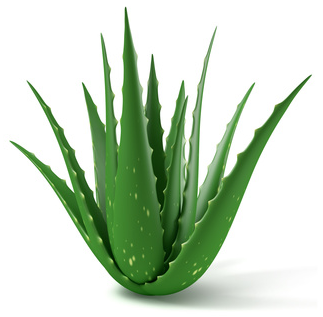
Figure 1: Aloe vera

Now, about the content of my blog: the upcoming few weeks, I will tell you about the Aloe vera plant grown in Honduras. The plant is visible in figure 1. I will discuss certain topics from the classes I had in school. 


I hope you will like the information and will keep on reading my posts. Not only would I love to teach you new things, but I would also appreciate it if you would tell me if you have any remarks or other feedback. 

Thank you for visiting my blog and I hope you enjoy reading.